


Transponder Key vs Regular Key: What's the Real Difference?
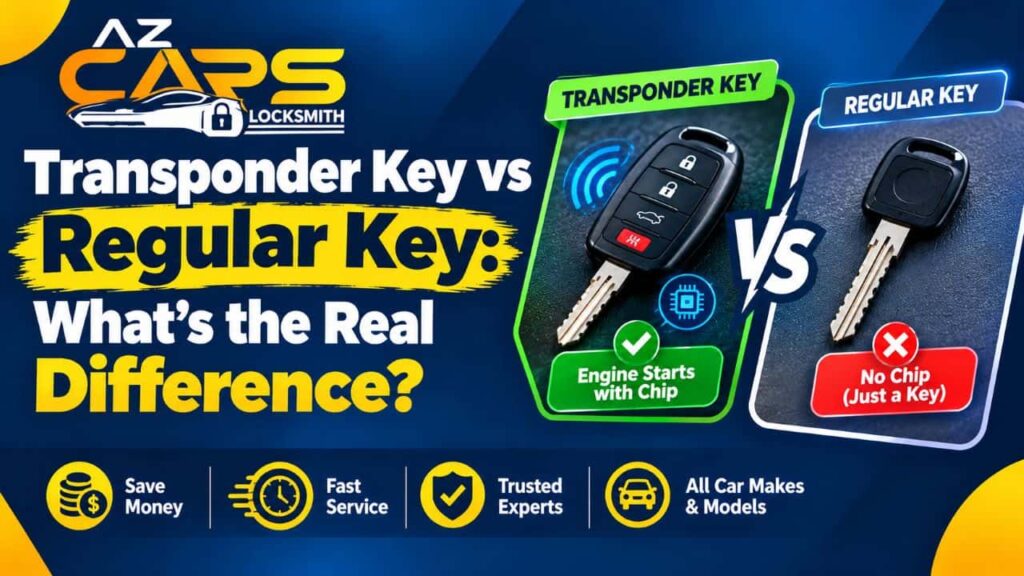
It is a comparison of a transponder key and the regular key, also known as a mechanical key, which is only the shape of the key and the cut edges align with the pins in the lock and ignition cylinder that is the end of the story. The transponder key is almost indistinguishable on the outside and has a small chip in the head which sends radio signals to the car’s computer. With that chip miscommunicated with the car, even if the physical cut is correct, the engine simply will not start.
How a Transponder Actually Works
A small chip with a special encrypted code is inside the plastic head of a transponder key. Once the key is inserted into the ignition or when the start button is pressed, with the key close by, an antenna around the ignition cylinder reads the code and compares it to what the car’s immobiliser system expects. In both cases, if the codes don’t match, and if there is no chip even if the physical key is correct, the immobilizer prevents the engine from starting. That’s why a copy of a transponder key that’s cut in the same way and gave you a key fob to open the doors to a car won’t get you into the car. Or maybe the cut is right, but the chip inside is not.
Why Cars Moved to Transponder Systems
Older cars were an easier target than modern cars, especially in terms of being easily reproduced without the owner’s knowledge by mechanical means. Starting in the mid to late 1990s, manufacturers began to incorporate transponder chips widely to reduce this vulnerability, as the thief would now have to present the correct physical cut and match the programmed chip to actually drive the car away. It worked well enough that transponder systems, or newer proximity based versions of the same idea, are now standard on nearly every vehicle built in the last two decades.
Telling Them Apart on Your Own Keyring
The physical head of a transponder key is usually a bit bulkier than a basic mechanical key, since there’s a chip and sometimes a small battery packed inside the plastic. Many transponder keys also include buttons for remote locking and unlocking, though that’s not a hard rule, some transponder keys look plain with no buttons at all. If you’re not sure which type you have, the most reliable way to check is whether the car starts with a hardware store duplicate, if it doesn’t, you’re almost certainly dealing with a transponder system.
Why Choose AZ Cars Locksmith
Handling both key types correctly requires different equipment and know how, and that’s exactly what our team brings to every job.
- Equipment for Both Key Types: We carry the tools to cut basic mechanical keys and to program transponder chips, so the type of key your car uses doesn’t change whether we can help.
- Accurate Diagnosis Before Cutting: We confirm which system your specific vehicle uses before starting, rather than assuming based on the vehicle’s age or make alone.
- Upfront Pricing for Either Job: Transponder work costs more than a basic cut due to the programming step, and we explain that difference clearly before any work begins.
- Licensed and Insured Technicians: Programming a transponder involves accessing your vehicle’s onboard computer, which is exactly why licensing and insurance matter here.
- Mobile Service for Both Key Styles: Whether it’s a basic cut or a full chip programming job, our vans come equipped to handle it at your location.
- Clear Explanations, No Jargon: We’ll explain which system your car uses and why in plain language, not technical shorthand that leaves you more confused than before.
How AZ Cars Locksmith Can Help
Beyond simply explaining the difference, here’s what we actually do once you know which type of key your vehicle needs.
- Cutting Basic Mechanical Keys: For older vehicles or secondary keys like trunk or glovebox keys that don’t need a chip, we cut a working copy on the spot.
- Programming New Transponder Chips: We sync a new or replacement chip key to your car’s immobilizer system so it starts the engine correctly.
- Diagnosing Chip Failures: If a transponder key stops working, the issue might be the chip, the battery, or the car’s reader antenna, and we figure out which before recommending a fix.
- Cloning Working Transponder Chips: If your current chip key still functions, we can often clone it to create a working spare without needing dealer level equipment.
- Explaining What Your Specific Car Needs: Not every owner knows which system their vehicle uses, and we’re happy to check and explain it in plain terms.
A Quick Note on Newer Proximity Systems
Plenty of vehicles have moved beyond basic transponder chips into proximity based smart key systems, where you don’t insert anything at all, the car simply detects the fob nearby and allows a push button start. These systems still rely on similar chip based communication underneath, just with added range and convenience features layered on top. The core concept, a chip that has to be recognized before the car will start, stays the same across both transponder and proximity systems.
What Happens If a Transponder Key Gets Lost Entirely
Losing a transponder key is a different situation than losing a basic mechanical one, since there’s no way to simply cut a replacement from a physical copy. A locksmith or dealer can register a brand new key’s chip to the vehicle directly into the immobilizer system, which is usually found on the onboard diagnostics port.
With just one key, this typically also includes the registration or ID step as the system is not designed to let unauthorized keys be added. It takes longer than a standard duplicate, but it’s a routine job for anyone equipped to do transponder programming regularly.
A Brief History of How We Got Here
Transponder technology in consumer vehicles traces back to the mid 1990s, when rising vehicle theft rates pushed manufacturers toward stronger anti theft measures beyond just a mechanical lock. Early transponder systems were relatively basic by today’s standards, but they made a noticeable dent in theft rates almost immediately, since a stolen mechanical key copy alone was no longer enough to drive the car away.
That success is largely why the technology spread so quickly across nearly every manufacturer within about a decade, and why proximity based smart key systems, built on the same underlying chip concept, became the natural next step as the technology matured further.
Final Thoughts
The transponder key vs regular key difference is significant only when something goes wrong, as a dead transponder chip and a worn down mechanical key may appear alike on the outside, but are entirely different problems. If you know what type of system you have, you won’t end up having to drive around to the wrong type of shop, and a simple phone call will prevent the need to guess each time.
Contact AZ Cars Locksmith
Not sure which key type your vehicle actually uses, or dealing with a key that won’t start the car anymore? Call AZ Cars Locksmith and we’ll figure it out quickly, then walk you through exactly what fixing it will involve and cost, no guesswork involved on your end.
Phone: 602-586-5999
Book Online: Click Here